A Research-Grounded Guide for Educators.
Dr Caleb Moyo.
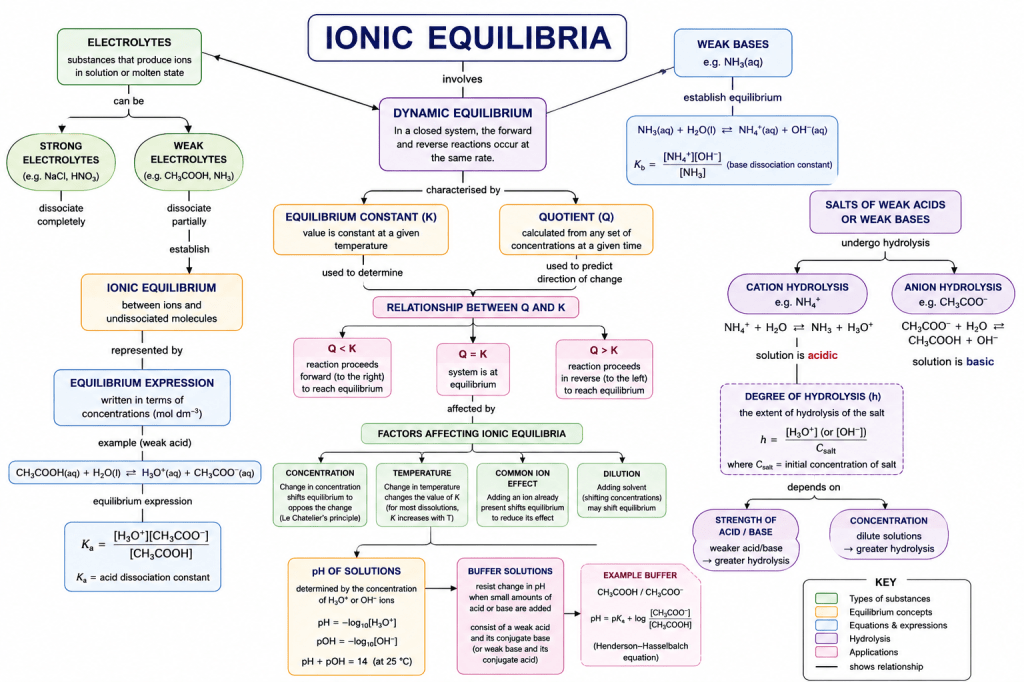
Introduction: When a Student Cannot Connect the Dots.
Imagine a high school chemistry student who can recite the definition of a covalent bond, draw a Lewis structure on demand, and yet cannot explain why water is polar or why ice floats. Facts have been memorised in isolation, but the conceptual architecture that gives those facts meaning is missing. This scenario is far more common than educators would like to admit, and it sits at the heart of why chemistry is regarded as one of the most conceptually challenging disciplines in secondary and tertiary science education.
Concept maps—hierarchical, node-and-link diagrams that make knowledge relationships visible—offer a research-supported tool for addressing this problem. Grounded in decades of empirical study, they have been shown to deepen student understanding, surface misconceptions before they become entrenched, and transform chemistry classrooms from fact-delivery systems into genuine learning environments. This article reviews the theoretical foundations of concept mapping, synthesises key empirical evidence, and offers practical guidance for chemistry educators at every career stage.
What Are Concept Maps? Theoretical Foundations.
A concept map is a graphical representation in which concepts are represented as nodes (usually boxes or ovals) and linked by labelled lines that specify the nature of the relationships between them. The resulting proposition—node–link–node—constitutes a meaningful statement about the domain being studied. Nested within a hierarchical structure, these propositions collectively reveal how a learner understands an entire knowledge domain.
The intellectual origins of concept mapping lie in the educational and cognitive work of Joseph D. Novak at Cornell University. Dissatisfied with rote-learning outcomes, Novak and his colleagues developed concept mapping in the 1970s as a practical classroom instrument rooted in David Ausubel’s theory of meaningful learning (Novak & Gowin, 1984). Ausubel argued that meaningful learning—as opposed to rote memorisation—occurs when new information is deliberately and intentionally anchored to prior knowledge structures, which he called cognitive schemata (Ausubel, 1963). For Ausubel, the most critical factor influencing learning is what the learner already knows.
Concept maps operationalise this theoretical claim. By making a student’s existing knowledge structure visible, they allow teachers to identify which cognitive anchors are available for new learning and which prior conceptions may be incorrect. In chemistry education, where learners frequently arrive with robust but scientifically inaccurate everyday ideas about matter, energy, and change, this diagnostic capability is particularly valuable.
Why Chemistry Is Conceptually Demanding: The Role of Multiple Representations.
Chemistry is unique among the sciences in requiring students to reason simultaneously across three distinct levels of representation: the macroscopic (observable phenomena such as colour change or gas production), the submicroscopic (particulate-level explanations involving atoms, ions, and molecules), and the symbolic (chemical formulas, equations, and notation) (Johnstone, 1991). Navigating and translating between these levels is cognitively demanding, and students who lack explicit instruction in making these connections frequently develop persistent, domain-specific misconceptions.
David Treagust and colleagues have produced an extensive body of research documenting how students struggle with multiple representations in chemistry. Treagust, Chittleborough, and Mamiala (2003) demonstrated that students’ understanding of chemical phenomena is shaped critically by the representational tools they use and by whether instruction explicitly supports translation across levels. When students fail to link, for example, a visible colour change in a titration experiment to the underlying ionic reactions and their symbolic equation, meaningful understanding cannot emerge. Concept maps, by requiring students to explicitly label the relationships between nodes, compel them to articulate precisely these cross-level connections.
Empirical Evidence: What Research Tells Us About Concept Maps in Chemistry
Uncovering Misconceptions.
One of the earliest and most influential studies of concept mapping in undergraduate chemistry was conducted by Pendley, Bretz, and Novak (1994), who used concept maps to assess students’ understanding of general chemistry topics, including equilibrium and thermodynamics. Their analysis revealed that even high-achieving students held significant misconceptions about fundamental concepts—misconceptions that traditional multiple-choice examinations had completely failed to detect. The authors concluded that concept maps provide a window into student cognition that conventional tests simply cannot open (Pendley, Bretz & Novak, 1994).
This diagnostic strength was confirmed in the laboratory context. Stensvold and Wilson (1992) investigated whether concept mapping could help students understand complex chemistry laboratory procedures. Their research demonstrated that students who were trained to construct concept maps before and after laboratory activities showed significantly better comprehension of procedural relationships and underlying chemical principles than control groups. The maps helped students move beyond procedural recipe-following to genuine conceptual engagement with the science.
Supporting Meaningful Learning in Lectures and Tutorials.
Regis, Albertazzi, and Roletto (1996) studied concept mapping across an entire academic year with undergraduate chemistry students in Italy. Their longitudinal findings revealed that students who regularly constructed concept maps developed more elaborate, more interconnected knowledge structures over time, with stronger cross-topic linkages. Crucially, their maps also became more scientifically accurate as the year progressed, suggesting that the process of constructing maps is itself a learning mechanism, not merely a measurement instrument (Regis, Albertazzi & Roletto, 1996).
At the level of specific chemistry domains, Nicoll, Francisco, and Nakhleh (2001) investigated concept mapping in the context of general chemistry and found it to be particularly effective for topics such as acids and bases, where students must simultaneously manage macroscopic observations (pH indicators changing colour), submicroscopic reasoning (proton transfer), and symbolic representation (Ka expressions). Their work underlined the importance of training students to use concept maps before expecting sophisticated map construction (Nicoll, Francisco & Nakhleh, 2001).
Assessment and Collaborative Learning.
Francisco et al. (2002) extended this research by demonstrating that collaboratively constructed concept maps—produced by pairs or small groups of students—can be even more powerful than individually constructed maps. Group concept mapping promotes discussion, negotiation of meaning, and peer explanation, all of which are consistent with constructivist learning principles. The social dimension of mapping also means that individual misconceptions are more likely to be challenged and resolved (Francisco et al., 2002).
More recently, Talbert et al. (2020) investigated digital concept mapping tools in undergraduate organic chemistry. Their findings indicated that students who used digital concept mapping environments produced more complex and better-connected maps than those who used paper-based methods, and that the digital format enabled richer instructor feedback. The study also highlighted that concept maps serve as genuine formative assessment tools, providing instructors with granular information about the state of student understanding at a given moment in the course (Talbert et al., 2020).
Practical Classroom Applications.
Chemical Bonding.
Concept mapping is especially effective for teaching chemical bonding, a topic that cuts across all three of Johnstone’s representational levels. A well-constructed bonding map might begin with the superordinate concept of “chemical bonds,” branch into ionic, covalent, and metallic bonds, and link each to submicroscopic explanations (electron transfer vs sharing vs delocalisation), macroscopic properties (conductivity, melting point, hardness), and symbolic representations (Lewis structures, molecular formulas). Students who build such maps are required to articulate why ionic bonds produce crystalline lattices with high melting points, rather than simply reciting that fact.
Atomic Structure.
The abstract nature of atomic structure—electrons, orbitals, and quantum numbers are wholly invisible to direct observation—makes concept mapping particularly valuable. A concept map for atomic structure can bridge from the macroscopic observation of atomic emission spectra (coloured lines in the visible range) through the submicroscopic notion of electron energy levels to the symbolic representation of electron configurations. Students who construct these maps develop the integrative understanding necessary to explain not merely how atoms are structured, but why that structure produces the chemical behaviour they observe.
Stoichiometry.
Stoichiometry is notorious for being reduced to algorithmic calculation. Concept maps can counteract this tendency by requiring students to make explicit the conceptual relationships between moles, molar mass, Avogadro’s number, and chemical equations. A map that links “1 mole” to “6.022 × 10²³ particles” to “molar mass in grams” to “conversion between mass and amount” makes the underlying logic of stoichiometric calculation visible and meaningful, rather than presenting it as a disconnected set of formulas to be applied by rote.
Thermodynamics.
Thermodynamics presents students with some of the most abstract concepts in the chemistry curriculum, including enthalpy, entropy, Gibbs free energy, and spontaneity. Pendley, Bretz, and Novak (1994) explicitly highlighted thermodynamics as a domain where concept maps are especially powerful precisely because of its abstract, heavily relational character. A concept map exploring spontaneity might connect ΔG to ΔH and ΔS through the linking proposition “is determined by the relationship between” and further link each variable to observable examples: exothermic reactions (ΔH negative), processes that increase disorder (ΔS positive), and the temperature dependence of their relative magnitudes.
Laboratory Learning.
Stensvold and Wilson (1992) demonstrated that concept mapping enhances laboratory learning by helping students understand not just what they are doing, but why each step matters in relation to the underlying chemistry. A pre-laboratory concept map, constructed by students before they enter the lab, can serve as a preparatory scaffold that orients their observational attention during the experiment. A post-laboratory map, constructed after the experiment, then requires students to integrate their observations—the macroscopic phenomena—with the explanatory framework introduced in lectures and textbooks.
Assessing and Diagnosing Misconceptions.
The assessment applications of concept maps in chemistry are well established. Aguiar and Correia (2016) demonstrated that instructor-constructed expert maps and student maps can be compared systematically to identify specific conceptual gaps and errors. This approach is especially useful in identifying “missing links”—relationships that students have failed to form—and “incorrect links”—propositions that reflect genuine misconceptions. Unlike a test score, a concept map tells the teacher not just that a student is struggling, but precisely where and why.
Benefits and Limitations of Concept Mapping in Chemistry Education.
Benefits.
The empirical literature converges on several key benefits of concept mapping in chemistry education:
- Deep conceptual understanding: By requiring students to articulate relationships, concept maps promote the kind of elaborative processing that leads to durable learning (Novak & Gowin, 1984).
- Misconception identification: Maps reveal incorrect propositions that conventional assessment cannot detect (Pendley, Bretz & Novak, 1994).
- Metacognitive development: The act of constructing a map encourages students to reflect on what they know, what they do not know, and how their knowledge is organised (Regis, Albertazzi & Roletto, 1996).
- Rich assessment data: Maps provide qualitative, structure-sensitive information about student understanding that complements quantitative test scores (Aguiar & Correia, 2016).
- Cross-representational thinking: Maps naturally encourage students to build bridges between macroscopic, submicroscopic, and symbolic representations (Treagust, Chittleborough & Mamiala, 2003).
Limitations and Challenges.
Despite these benefits, the honest researcher must also acknowledge significant challenges:
- Student training requirements: Novak and Gowin (1984) emphasised that students cannot be expected to construct meaningful concept maps without explicit instruction and practice. Without this investment, maps are likely to be superficial and misleading.
- Teacher workload: Evaluating concept maps is time-intensive and requires domain expertise and clear scoring rubrics. In large undergraduate cohorts, this can be a significant logistical barrier.
- Scoring subjectivity: Developing reliable, valid scoring systems for concept maps remains an ongoing methodological challenge in the research literature (Nicoll, Francisco & Nakhleh, 2001).
- Student resistance: Some students, accustomed to rote-learning environments, find concept mapping unfamiliar and frustrating, particularly if they are not shown the evidence for its effectiveness.
Practical Takeaways for Chemistry Teachers.
Based on the research reviewed above, the following evidence-based recommendations are offered for educators considering implementing concept mapping in chemistry courses:
- Teach mapping explicitly: Spend at least two or three class sessions introducing the concept mapping process, using familiar, non-chemistry content before applying the tool to chemistry topics.
- Start with structured maps: Provide partially completed maps (with some nodes already placed) as scaffolds for novice mappers, and move toward student-generated maps as confidence grows.
- Use maps diagnostically: Collect and review student maps before major instructional units to identify what prior knowledge and what prior misconceptions your students bring to new topics.
- Incorporate group mapping: Use collaborative concept mapping—especially in tutorial and laboratory settings—to generate productive peer discussion and collective sense-making.
- Use maps for assessment: Develop clear scoring rubrics that reward accurate propositions and penalise incorrect links. Share these rubrics with students so they understand the expectations.
- Leverage digital tools: Platforms such as CmapTools (free to download from the Institute for Human and Machine Cognition) support the construction, sharing, and comparison of concept maps and reduce the logistical burden on instructors.
- Align maps with representational demands: Explicitly design concept maps that require students to connect macroscopic observations, submicroscopic explanations, and symbolic representations, particularly in topics such as bonding, acids and bases, and thermodynamics.
Conclusion.
Chemistry education faces a persistent challenge: students can perform well on examinations that reward memorisation and algorithmic thinking while remaining genuinely confused about the conceptual fabric of the discipline. Concept maps, grounded in Ausubel’s theory of meaningful learning and developed into a practical classroom tool by Novak, offer a research-validated response to this challenge. From Pendley, Bretz, and Novak’s early demonstration that maps reveal hidden misconceptions to Treagust and colleagues’ documentation of the representational demands unique to chemistry to Talbert and colleagues’ exploration of digital mapping tools, the cumulative evidence is clear: concept mapping can transform how students understand and experience chemistry.
The tool is not without its demands. Teachers must invest in training students, developing scoring rubrics, and providing consistent feedback. But the return on this investment, students who can explain why bonds form, why reactions are spontaneous, and why ions dissolve in water, rather than merely reciting that they do, represents precisely the kind of deep, meaningful, durable learning that chemistry education is ultimately for.
References
Aguiar, J. G., & Correia, P. R. M. (2016). Using concept maps in chemistry education: Diagnosis of knowledge and misconceptions. Chemistry Education Research and Practice, 17(2), 413–424. https://doi.org/10.1039/C6RP00069J
Ausubel, D. P. (1963). The psychology of meaningful verbal learning. Grune & Stratton.
Francisco, J. S., Nakhleh, M. B., Nurrenbern, S. C., & Miller, M. L. (2002). Assessing student understanding of general chemistry with concept mapping. Journal of Chemical Education, 79(2), 248–257. https://doi.org/10.1021/ed079p248
Johnstone, A. H. (1991). Why is science difficult to learn? Things are seldom what they seem. Journal of Computer Assisted Learning, 7(2), 75–83.
Nicoll, G., Francisco, J. S., & Nakhleh, M. B. (2001). An investigation of the value of using concept maps in general chemistry. Journal of Chemical Education, 78(8), 1111–1117. https://doi.org/10.1021/ed078p1111
Novak, J. D., & Gowin, D. B. (1984). Learning how to learn. Cambridge University Press.
Pendley, B. D., Bretz, R. L., & Novak, J. D. (1994). Concept maps as a tool to assess learning in chemistry. Journal of Chemical Education, 71(1), 9–15. https://doi.org/10.1021/ed071p9
Regis, A., Albertazzi, P. G., & Roletto, E. (1996). Concept maps in chemistry education. Journal of Chemical Education, 73(11), 1084–1088. https://doi.org/10.1021/ed073p1084
Stensvold, M. S., & Wilson, J. T. (1992). The interaction of verbal ability with concept mapping in learning from a chemistry laboratory activity. Science Education, 76(4), 473–481. https://doi.org/10.1021/ed069p230
Talbert, L. E., Bonner, J., Mortezaei, K., Guregyan, C., Henbest, G., & Eichler, J. F. (2020). Revisiting concept maps as a formative learning and assessment tool. Chemistry Education Research and Practice, 21(1), 40–55. https://doi.org/10.1039/C9RP00059C Treagust, D. F., Chittleborough, G., & Mamiala, T. (2003). The role of submicroscopic and symbolic representations in chemical explanations. International Journal of Science Education, 25(11), 1353–1368. https://doi.org/10.1080/0950069032000
 MoyoEd Research
Leave a comment